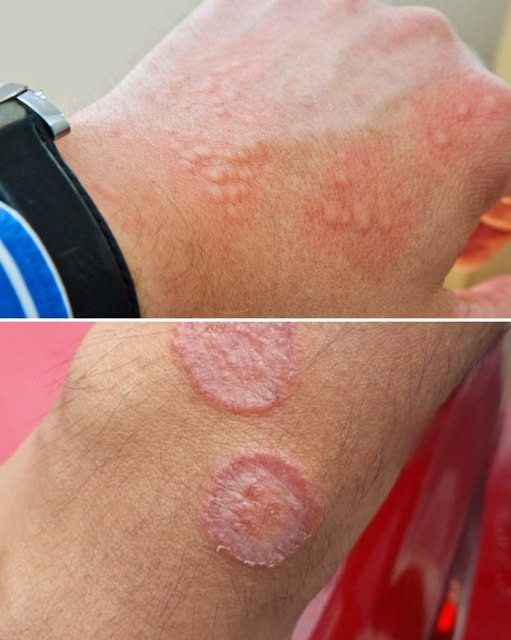
A fungal infection caused by dermatophytes. It thrives in warm, moist areas and is common in athletes or people who sweat heavily.
Signs: Red, ring-shaped rash with raised edges; intense itching; spreads from the groin to inner thighs.
2. Intertrigo
A friction rash caused by skin rubbing against skin. Common in people who are overweight, have deep skin folds, or wear tight clothing.
Signs: Raw, red, irritated skin in skin folds; may become moist or weepy; secondary yeast or bacterial infection possible.
3. Contact Dermatitis
An allergic or irritant reaction to soaps, detergents, fabric softeners, laundry products, or personal lubricants.
Signs: Red, itchy, sometimes blistering skin where the product touched; sharp borders; resolves when the irritant is removed.
4. Heat Rash (Miliaria)
Blocked sweat ducts trap perspiration under the skin.
Signs: Tiny red or clear bumps; prickly or stinging sensation; worse in hot, humid weather.
5. Folliculitis
Infected hair follicles from shaving, friction, or bacteria.
Signs: Small red bumps or white-headed pimples around hair follicles; may be tender.
6. Yeast Infection (Candidiasis)
Overgrowth of Candida fungus, common after antibiotic use or in people with diabetes.
Signs: Bright red rash with satellite bumps; intense itching; white discharge possible.
How to Address Groin Skin Irritatio
Immediate Relief
✅ Keep the area clean and dry – Gently wash with warm water and mild, fragrance-free soap. Pat dry (don't rub).
✅ Apply a barrier cream – Zinc oxide (diaper rash cream) or petroleum jelly can protect irritated skin.
✅ Use over-the-counter antifungal cream – For suspected jock itch, use clotrimazole, miconazole, or terbinafine.
✅ Apply hydrocortisone cream – For contact dermatitis or intertrigo (use sparingly and not for fungal infections).
✅ Wear loose, breathable clothing – Cotton underwear and loose pants allow airflow.
✅ Change out of sweaty clothes promptly – Especially after exercise.
Prevention
✅ Shower daily – Especially after sweating.
✅ Dry thoroughly – Use a separate towel for the groin area.
✅ Wear moisture-wicking fabrics – For exercise.
✅ Avoid tight underwear – Choose boxers or loose-fitting briefs.
✅ Change underwear daily – More often if you sweat heavily.
✅ Use gentle laundry products – Fragrance-free detergents, skip fabric softeners.
✅ Maintain a healthy weight – Reduces skin folds and friction.
✅ Manage underlying conditions – Diabetes, obesity, and immune disorders increase risk.
When to See a Doctor
Make an appointment if:
-
Symptoms persist for more than 1-2 weeks despite home treatment
-
The rash spreads rapidly
-
You have a fever
-
There is pus, oozing, or increasing pain (possible bacterial infection)
-
You have diabetes (infections can be more serious)
-
You have a weakened immune system
-
You're unsure of the cause
The Bottom Line
Groin skin irritation is common, treatable, and often preventable. Most cases respond well to good hygiene, over-the-counter creams, and lifestyle changes. But persistent or severe symptoms deserve medical attention.
Listen to your body. Don't ignore persistent itching, pain, or spreading rashes.