The Scene of the “Crime”
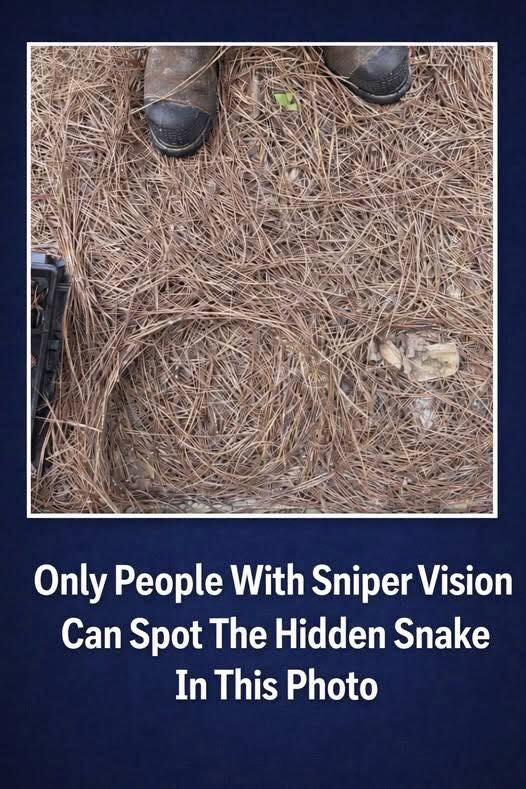
The viral image, originally shared by Reddit user @mellohorse, presents what appears to be a completely ordinary forest scene. It’s messy, natural, and unassuming.
We see the ground thickly covered in a carpet of dry, brown pine needles and scattered twigs. A pair of well-worn brown work boots rests at the bottom of the frame, suggesting someone was standing right there. A black plastic storage crate sits nearby in the upper left. Everything seems peaceful. There is no immediate reason for alarm.
The Challenge: Hiding in Plain Sight
But don’t let the tranquil scene fool you. Something is hiding in plain sight, watching and waiting. The challenge is simple, yet infuriatingly difficult: Spot the snake.
Somewhere in that mess of pine straw is a snake. It isn’t tucked away under a rock or hiding behind the crate. It is right there on the surface. However, it is camouflaged so perfectly among the twigs and needles that an estimated 95% of people miss it entirely on their first pass.
Its scales and natural coloring merge seamlessly with the browns, tans, and shadows of the forest floor, turning this calm image into the ultimate test of observation. This illusion highlights just how easily our human brains can be tricked when shapes, colors, and patterns blend together.
Why We Love Getting Tricked
Why are these types of optical illusions so addictive? It’s the thrill of the mental chase.
When you are staring at the image, your brain is desperately trying to find a break in the pattern—something that doesn’t belong. The frustration builds as you scan back and forth. But then, suddenly, the hidden detail jumps out at you. That satisfying “aha!” moment releases a little rush of dopamine. It makes all the staring worth it.
These puzzles tap into our innate love of problem-solving while gently reminding us that our perception of reality isn’t always as reliable as we think it is.
The Reveal
see continuation on next page