You move in with Elena for a while because silence becomes dangerous in your own apartment. Every creak sounds like footsteps. Every shadow carries memory. Her guest room is too warm, the mattress too soft, and the streetlights outside too bright, but she leaves a glass of water on the nightstand every evening without comment and that tiny ordinary kindness becomes one of the first things that convinces your body the world is not entirely hostile.
Three weeks later, Detective Phelps calls with another twist. “We found your bus lady.”
For a second you do not understand the sentence. Then your whole body wakes up. The old woman. The warning. The impossible line that saved your life. Phelps tells you her name is Teresa Maldonado, age seventy-two, and she used to clean houses in Alamo Heights. One of those houses belonged to Rosa.
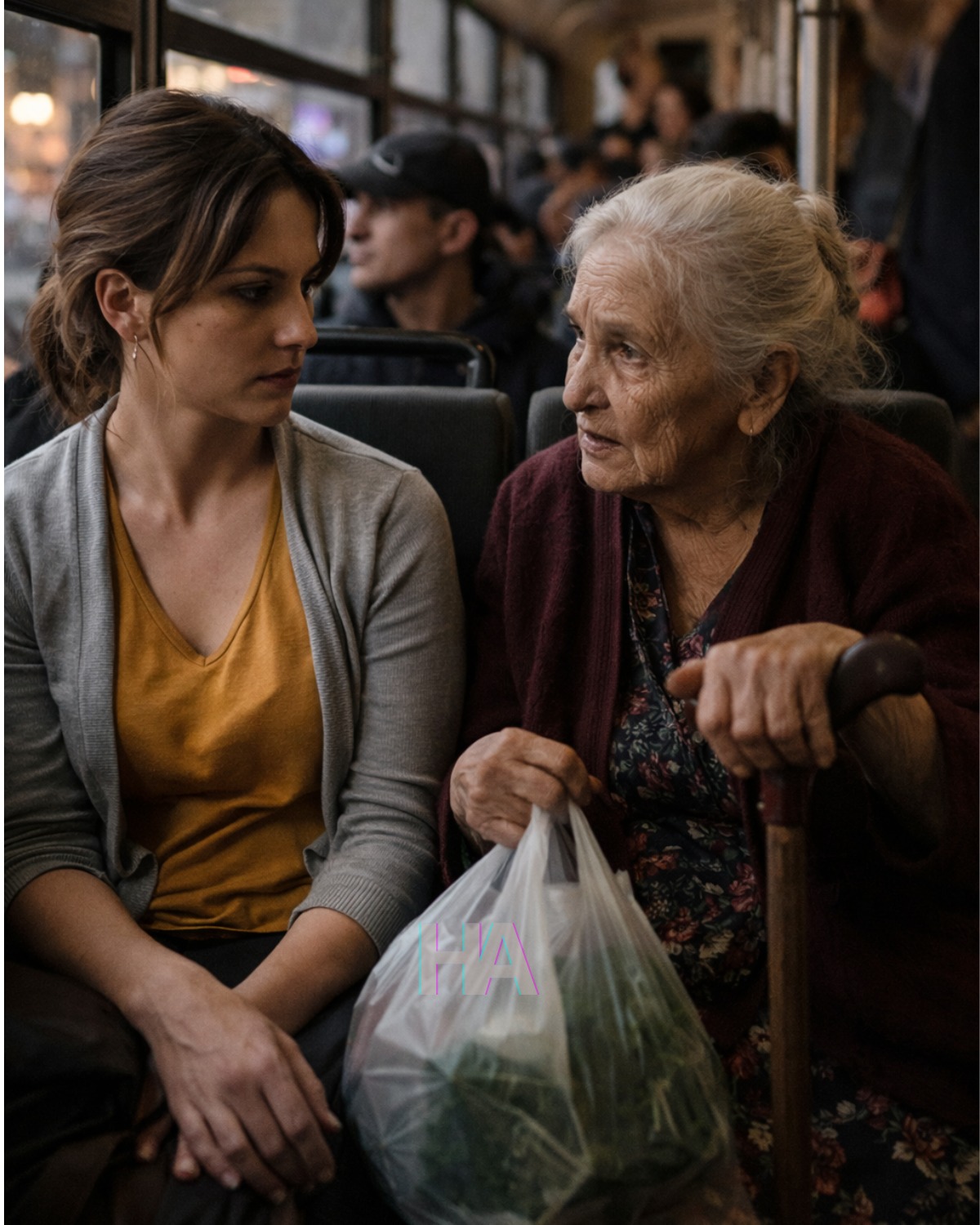
You meet Teresa in a small interview room at the station. In daylight, without the strange bus-stop theater of that first encounter, she looks even frailer and somehow tougher. She folds her hands over a cane and studies you with eyes that have seen too much to waste sympathy cheaply. “I’m sorry I scared you,” she says. “I didn’t know how else to say it fast.”
You sit across from her, throat tight. “How did you know?”
Teresa looks down. “Because I heard them.”
Weeks before, while cleaning Rosa’s rental house, Teresa had overheard part of a speakerphone argument between Rosa and Mauricio. She caught words like policy, necklace, dose, cabin, tomorrow night. At first she thought they were sick people joking cruelly. Then she saw a printed copy of your insurance information half sticking out of Rosa’s purse and understood enough to become terrified. She tried to memorize your face from a photo Rosa had on her phone. When she spotted you on the bus by blind luck, she took the chance she had.
“Why didn’t you go to the police?” you ask gently.
Her mouth twists. “Because poor old women who clean houses hear ugly things all the time. People with money always think no one will believe us.”
The answer cuts because it is both sad and true. She did what the system had trained her to think was safest: not enough to expose herself fully, just enough to maybe save a stranger. Yet it was enough. A whisper on a city bus. That is how close death came to winning.
The case moves fast once the evidence stacks high enough to blot out excuses. Mauricio’s public defender tries angles anyway. Marital stress. Misunderstood texts. A consensual weekend argument. The necklace was only jewelry. The insurance change was financial planning. The chemicals at the cabin were for pest control. The rope and tarp were for outdoor repairs. Each explanation sounds more insulting than the last.
Then Gabriel finds the kill shot in a backup Mauricio forgot existed: an auto-synced voice memo recorded accidentally when he thought he was testing the cabin’s speaker system. The file begins with static and Mauricio cursing under his breath. Then Rosa’s voice says, clear as glass, “Once she’s dizzy, push from the side steps. Head injury. Water if needed. Widowers cry, baby. Just don’t overdo it.”
When the prosecutor plays that in court, the room changes temperature.
You testify on the third day of trial. Everyone warned you it would be brutal, and they were right, but not in the way you expected. It is not the questions that hurt most. It is having to use the plain language of reality for things your mind still sometimes tries to classify as nightmare. Yes, that was my life insurance policy. Yes, he invited me to a remote cabin the next night. Yes, he served wine. Yes, he grabbed me when I tried to leave.
Mauricio does not look at you at first. Then halfway through cross-examination, when his attorney suggests you exaggerated because you wanted out of the marriage and a dramatic story to justify it, you turn and meet his eyes. There is no remorse there. Only resentment that you did not die on schedule. In that instant something final falls away inside you, not love because that died earlier, but the old compulsion to make sense of him.
The jury convicts both Mauricio and Rosa. Attempted murder, conspiracy to commit murder, insurance fraud, forgery, and related charges. Sentencing comes six weeks later. Mauricio gets thirty-two years. Rosa gets thirty-eight because of her prior fraud history and her central role in procurement and planning. When the judge reads the numbers, you do not feel triumphant. You feel emptied, like a storm finally passed and revealed how much of the roof is gone.
People imagine justice as a trumpet blast. Usually it is quieter. Paper stamped. Doors closing. A bailiff guiding handcuffed people away while fluorescent lights hum overhead and someone coughs in the back row. What changes your life is not the courtroom drama itself, but what comes after when the legal machine finishes and you still have to decide how to inhabit your own skin.
For a while, you live in fragments. You jump at men’s voices in grocery stores. You cannot smell bleach without seeing the cabin. You go three months unable to wear necklaces of any kind, even cheap ones, because anything around your throat feels like a threat disguised as decoration. Elena pushes you into therapy with the relentless love of a woman who has no patience for surviving only halfway.
Therapy is not cinematic. No magical speech, no one-hour transformation, no neat sequence where pain is named and therefore solved. It is repetition. It is learning that hypervigilance can outlast danger. It is admitting that part of you is ashamed not because you did anything wrong, but because betrayal makes victims feel foolish, and foolishness is easier to carry than pure vulnerability.
One afternoon, six months after the trial, you ride the bus again on purpose.
Not because you are fully healed. Because you are tired of arranging your life around a ghost. You sit near the window with your hands clenched in your lap and watch San Antonio slide by in heat-softened blocks: tire shops, pawn stores, taco trucks, laundromats, school zones, payday loan signs, churches with hand-painted scripture, somebody selling cold watermelon out of a pickup bed. It is the same city and not the same city, because you are no longer the same woman moving through it.
At the third stop, an elderly woman boards with grocery bags and a cane.